
Sustainable Living: The Solar Revolution in the Tropics
The transition to renewable energy in tropical climates presents a unique set of challenges and extraordinary opportunities. Where intense year-round sunlight meets high humidity and severe seasonal weather patterns, solar technology isn't just about generation—it's about resilient integration.
At ParasPower, our engineering division has studied the interplay between modern photovoltaic systems and traditional tropical architecture. We've discovered that when designed correctly, solar arrays provide benefits that extend far beyond electricity generation, actively contributing to the climatic comfort of the home itself.
Passive Cooling Through Solar Shade
One of the most overlooked benefits of rooftop solar in hot climates is the creation of a 'thermal buffer.' Traditional roofing materials absorb the intense midday sun, radiating heat downward into the living space, forcing air conditioning systems to work harder.
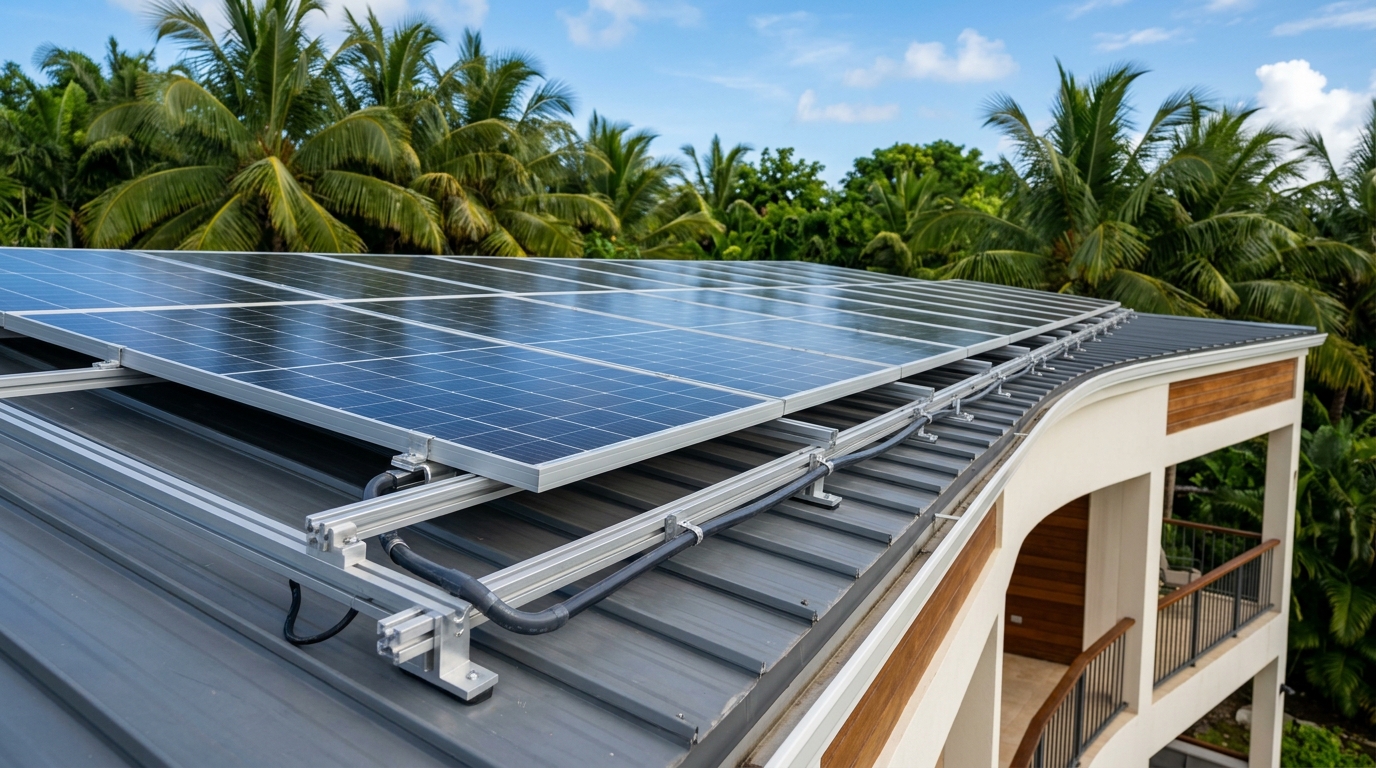
By installing high-efficiency panels a few inches above the roof surface, we introduce a continuous air gap. The panels absorb the direct solar radiation—converting it into electricity—while the circulating air beneath them carries away convective heat. This secondary benefit effectively shades the roof deck, often reducing attic temperatures by up to 35% during peak sunlight hours.
Battery Resilience During Tropical Storms
The tropical wet season brings vital rain but also the threat of severe weather and subsequent grid instability. For regions prone to monsoons or cyclones, solar generation alone is insufficient; storage is critical.
Modern residential battery systems are designed to operate seamlessly during grid outages. When high winds disrupt traditional power lines, intelligent inverters instantly island the home, drawing from stored capacity. During the day, the solar array continues to charge the batteries, creating a micro-grid that can sustain a household through multi-day utility failures, ensuring that essential appliances like refrigeration, lighting, and medical devices remain functional.
Architectural Integration in Tropical Landscapes
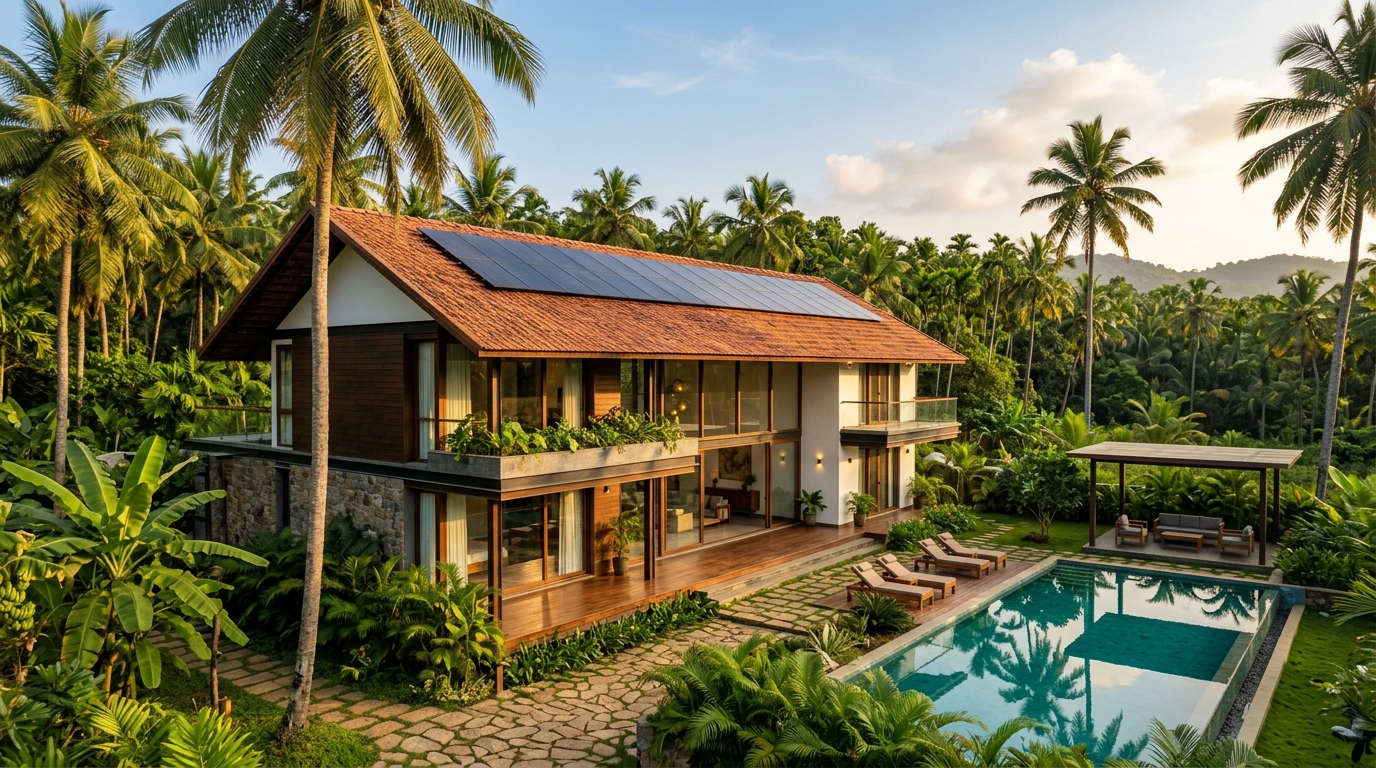
Aesthetics matter. The heavy, industrial look of early solar arrays often clashed with the sloped, terracotta, or thatched roofs characteristic of tropical architecture. Today's approach is fundamentally different.
tips_and_updates Engineering Insight
"We approach every installation not just as an electrical project, but as an architectural enhancement. We utilize low-profile mounting systems and all-black monocrystalline panels that integrate flush with rooflines, maintaining the structural integrity and aesthetic heritage of the home."
As we continue to develop energy solutions tailored for the tropics, the synergy between nature's power and intelligent engineering becomes increasingly clear. Solar is no longer just an alternative energy source; it is a fundamental component of sustainable, resilient tropical living.
ParasPower Engineering Division
A dedicated team of technical experts and architectural consultants specializing in high-efficiency solar integration for demanding climatic conditions across Kerala and Southern India.